

Changing Communities[Societies] and behaviors by communication[ Advancing Health & Development].
HEALTH CONSULTING International
Dr Thompson Ntuba Akwo
International Speaker[Communicator]/Consultant
.jpg)
Registered in the state of Texas [San Antonio]
FN20130473262
Bank of America. Tel, SAN ANTONIO.
WASHINGTON DC,
PO BOX 17161 HOUSTON TEXAS USA 77722
TEL. 7372352378
Great Searches , Research and Impact Evaluation are the foundation for Global Health and Development communication and Promotion interventions.DR NTUBA AKWO THOMPSON
Global health communication and Promotion work requires great searches and research that informs and drives Global health media[communication ] , policies and Practice . Dr NTUBA THOMPSON AKWO has Searched and researched in some of the most prestigious institutions around the USA AND around the world and has taken part in lots of Searches and Research in International conferences where Search and research work in Bioscience and Global health and Development are presented , interviewing both government and University experts who present in those conferences in major cities around the World
The Role of Evaluation and Research in Impact Assessment and Program Development
Evaluation and research play a crucial role in understanding the effectiveness of programs and projects, particularly in fields such as global health communication, addiction recovery, and social and behavior change communication. These methodologies help organizations assess their initiatives, refine their strategies, and ensure meaningful outcomes. Among the most widely used research methods are quantitative surveys and interviews, which serve as essential tools for gathering data that inform programming and impact evaluation.
Quantitative Surveys and Interviews in Global Health Communication
Quantitative research methods, including structured surveys, enable practitioners to collect numerical data that can be analyzed statistically. These methods help measure key performance indicators, identify trends, and establish correlations between variables. For instance, in addiction and recovery programs, surveys can assess individuals' behavioral changes over time, providing insight into the effectiveness of interventions.
Interviews, on the other hand, offer qualitative depth that complements quantitative findings. Through structured or semi-structured conversations with participants, researchers gain a deeper understanding of personal experiences, challenges, and motivations that influence behavior. This approach is particularly valuable in behavior change communication, where understanding the psychological and social drivers of change is essential for designing impactful interventions.
Impact Evaluation: Data-Driven Decision Making
The primary objective of impact evaluation is to determine whether a program has achieved its intended outcomes. By systematically analyzing collected data, organizations can assess the strengths and weaknesses of their initiatives, make evidence-based improvements, and justify continued investment in specific projects. In global health communication, robust impact evaluation ensures that interventions are tailored to meet the needs of the target population, thereby maximizing effectiveness.
The data generated through surveys and interviews serve as empirical evidence that supports programming decisions. Trends identified through quantitative analysis allow organizations to refine their strategies, optimize resource allocation, and scale successful approaches. Additionally, qualitative insights from interviews provide context to numerical findings, enabling organizations to adapt their messaging and outreach efforts to resonate more effectively with their audience.
Conclusion
Evaluation and research are fundamental to program and project development, particularly in fields that rely on behavior change and communication strategies. The use of quantitative surveys and interviews provides a comprehensive understanding of program effectiveness, guiding organizations in their quest for impactful and sustainable solutions. As data-driven decision-making continues to shape the global health communication landscape, these research methodologies will remain indispensable tools in assessing, improving, and expanding social change initiatives.

Dr. Ntuba Akwo Thompson’s research at the National Library of Medicine (NLM) on the NIH campus in Bethesda, Maryland, underscores the high quality and depth of his work. The ID card from NLM serves as a testament to his affiliation with this prestigious institution, highlighting his commitment to advancing medical knowledge and improving health outcomes.
Research Excellence and Access to Resources: Conducting research at NLM provided Dr. Thompson with unparalleled access to a vast array of medical literature, cutting-edge research tools, and a collaborative environment with leading experts. This access enabled him to delve deeply into various health topics, ensuring that his work was grounded in the latest scientific evidence and best practices.
Impact on Health Communication: Dr. Thompson’s experiences at NLM significantly enhanced his ability to communicate complex health information effectively. By leveraging the extensive resources and knowledge available at NLM, he was able to develop more accurate and impactful health communication strategies. This has been particularly beneficial in his efforts to address health disparities and improve health literacy among diverse populations.
Contribution to Global Health: The research conducted at NLM has had a far-reaching impact on Dr. Thompson’s global health initiatives. His work, informed by the high-quality research and data from NLM, has contributed to the development of effective health programs and policies. These initiatives have addressed critical issues such as HIV/AIDS, maternal health, and youth health, demonstrating the practical application of his research in real-world settings.
Ongoing Influence and Legacy: The skills and insights gained from his research at NLM continue to influence Dr. Thompson’s work. His ability to integrate rigorous research with practical health solutions has made him a respected leader in the field of global health. The high quality of his work, bolstered by his experiences at NLM, ensures that his contributions will have a lasting impact on health communication and community health worldwide.
Dr. Ntuba Akwo Thompson’s research at the National Library of Medicine exemplifies his dedication to excellence and his commitment to improving health outcomes through high-quality, evidence-based work.

.jpg)

.jpg)


.jpg)


.jpg)


Searche and Research studies on the Healing ministries at Oral Roberts University for two years armed me with the resources to make a difference in the lives of those who came in contact with our work and outreaches . These resources contributed and added to those we keep and gathered from the headquarters of the Christian medical and Dental Association or CMDA in Bristol TN .
.jpg)
Search and RESEARCH Work at Johns Hopkins Medical History Library in Baltimore , Johns Hopkins medical School and the University of Maryland Medical schoolo libary in Blatimore .
.jpg)
.jpg)
.jpg)
.jpg)
Search and Research of government resources at the national archives in Washington DC and Maryland including visits at Carter presidentail library have greatly improved on our Global health and Development communication or media work .


.jpg)

.jpg)

.jpg)

.jpg)


Legacy in the Archives: Dr. Ntuba Thompson Akwo’s Research Journey at the Briscoe Center for American History 📦 A Box, A Badge, A Mission


Legacy in the Archives: Dr. Ntuba Thompson Akwo’s Research Journey at the Briscoe Center for American History
📦 A Box, A Badge, A Mission
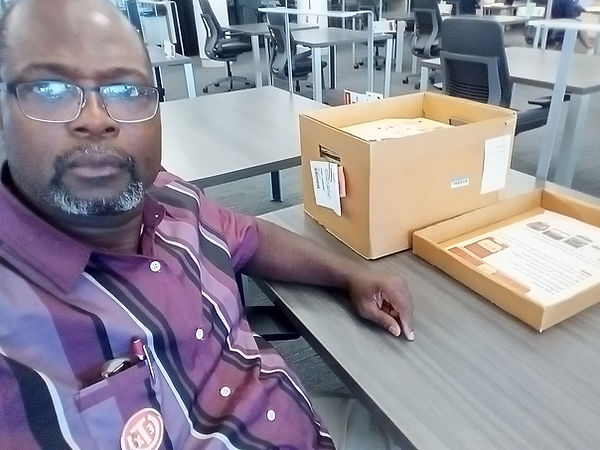
In the quiet hum of the University of Texas at Austin’s Briscoe Center for American History, Dr. Ntuba Thompson Akwo sat surrounded by archival boxes—each one a portal into the soul of Texas governance and American legacy. Wearing his signature maroon-striped shirt and a circular badge marked “15,” he leaned into the past with purpose. The box labeled “Box 1 of 1 (FedEx)” was addressed to UT Austin’s Office of Admissions, but its contents—pink slips, printed sheets, and historical documents—held deeper significance for Dr. Akwo’s inquiry into policy-making, state power, and the trauma of presidential assassination.
📚 Researching Texas Governance and Policy-Making
Dr. Akwo’s research at the Briscoe Center was not just academic—it was a spiritual and civic excavation. He traced the evolution of Texas governance through legislative records, gubernatorial correspondence, and civic planning documents. His lens was complexity-informed: how did Texas leaders respond to crises, shape public health, and navigate federal-state tensions? He examined the role of policy in shaping immigrant justice, minority health, and civic engagement—issues he had long championed in Houston and beyond.
🕵🏾 The Kennedy Assassination: Texas as a Stage of Tragedy
Among the most haunting chapters of his research was the killing of President John F. Kennedy in Dallas, Texas. Dr. Akwo studied the layers of archival evidence—press clippings, eyewitness accounts, and government memos—to understand how Texas became the backdrop for one of the most traumatic events in American history. He explored the political climate of the time, the security failures, and the ripple effects on national trust and governance. For Dr. Akwo, this wasn’t just about history—it was about healing, accountability, and the role of narrative in shaping collective memory.
🧠 From Archives to Action
Dr. Akwo’s time at the Briscoe Center was deeply aligned with his broader mission: activating legacy through documentation, teaching, and civic storytelling. He used the research to inform curriculum modules on trauma-informed governance, spiritual care in political crises, and the ethics of public leadership. The archival boxes became more than storage—they were vessels of truth, tools for justice, and seeds for transformation.
📸 A Living Archive
Captured in the photos is a moment of quiet intensity: Dr. Akwo seated beside the open box, surrounded by the architecture of inquiry. The modern office setting, the communal tables, the documents spread before him—all reflect a scholar at work, a healer in the archives, a visionary connecting past wounds to future wisdom.
Dr. Akwo’s research at UT Austin’s Briscoe Center is a testament to the power of archives not just to preserve history, but to provoke reflection, inspire curriculum, and guide policy toward dignity and justice. His journey reminds us that every box holds a story—and every story, when told with care, can change the world.


Call
Follow


